

Founder note
Gundam for Your Brain
Everyone is building AI assistants. Serious knowledge work needs something closer to a cognitive exoskeleton.
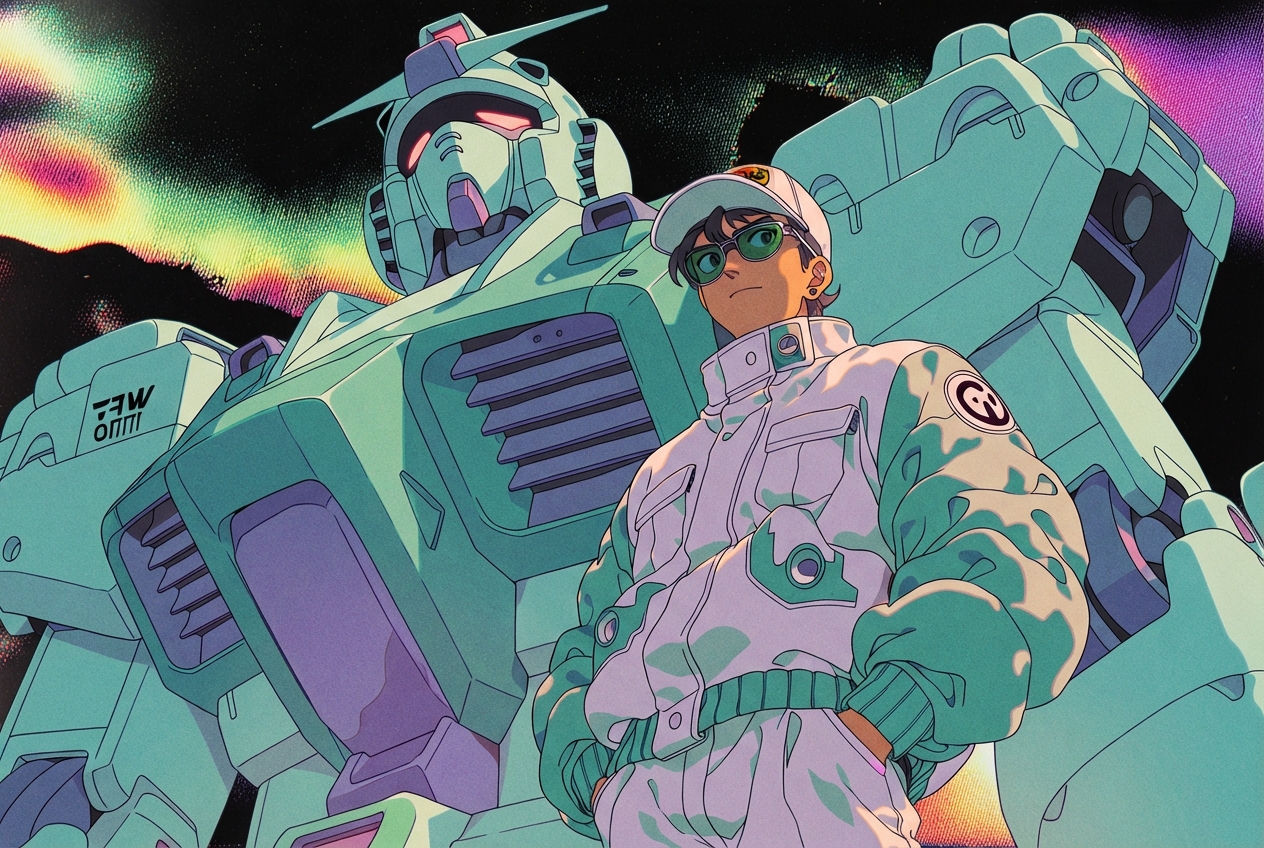
In 1979, Yoshiyuki Tomino did something that changed science fiction forever. He made the giant robot boring.
Before Mobile Suit Gundam, every mech anime was the same story: a superhero robot with magical powers saves the day. Mazinger Z. Getter Robo. The robot was the protagonist. The pilot was just the kid lucky enough to sit inside it.
Tomino threw that out. In Gundam, the mech is military hardware. Mass-produced. It breaks. It runs out of ammo. What matters isn't the machine. It's who's piloting it. Amuro Ray starts as a terrified teenager and becomes the most dangerous pilot in the One Year War, not because his Gundam gets upgrades, though it does, but because he gets better. The RX-78-2 is a tool. Amuro's growing skill, judgment, and spatial awareness are the weapon.
This distinction, the pilot is the point, not the mech, turned Gundam into a permanent reframe of what the human-machine relationship could look like in fiction.
I think it's also the single best mental model for understanding what AI should be doing for knowledge workers. And I think almost everyone is building the wrong thing because they're using the wrong metaphor.
The assistant problem
The dominant metaphor for AI in knowledge work right now is the assistant. You've seen it everywhere: AI assistants, AI copilots, AI agents that take direction and report back. The framing is simple. The AI is a capable subordinate. You manage it. It delivers.
This works fine for tasks. Write this email. Summarize this doc. Debug this function. The human has intent, the AI has capability, the interaction is a clean transaction.
But for the work that actually matters, strategy, research, analysis, complex reasoning, the stuff where the quality of the thinking is the entire point, the assistant metaphor fails in a way that matters. When AI helps by producing a strategy for you to review, you're in the position of evaluating someone else's work. Is this right? Did it miss something? Do I agree? You're managing output rather than doing your own thinking. The AI is the protagonist. You're quality control.
Tomino figured this out in 1979. The robot isn't the protagonist. The pilot is.
What I actually want
After thousands of hours doing serious knowledge work with LLMs, strategy, competitive analysis, product architecture, organizational design, I can tell you exactly what I want from AI. It isn't an assistant.
I want a mech. A cognitive exoskeleton that makes my thinking more powerful without taking the thinking away from me.
Here's what that means in practice, because it's not abstract. It's the difference between how I worked two years ago and how I work now.
I stopped losing my own thinking
This is the first thing you notice and it never stops being significant. Before, I'd have a breakthrough in a Thursday conversation, a structural connection between two problems, a strategic insight that reframed everything, and by the following Tuesday it was a vague memory. Maybe some notes I'd never revisit. The insight was real. The residue was inert.
Now, the insight gets captured as a typed entity in a structured knowledge graph with explicit relationships to everything it connects to. Not a note. A node. Three months later, when I'm working on something adjacent, the system surfaces it: this competitive dynamic you identified in October is relevant to the product decision you're making now. I would have missed that connection. My biological memory doesn't have a traversal engine. The mech does.
I can hold larger problems
Human working memory holds maybe seven items. For complex work, this means you're constantly swapping things in and out, constantly missing connections between things you know. The exoskeleton holds the full structure: competitive dynamics, user research, product commitments, design tensions, brand principles. All typed. All related. All traversable. I reason about one facet. The mech maintains awareness of the whole. The problem doesn't shrink. My capacity for it grows.
My judgment stays in charge
This is the Tomino point. In the exoskeleton, I'm still thinking. The AI and I co-inhabit the same structured medium: same types, same shapes, same knowledge graph, same constraints. When I capture an insight, the AI can reason over it in the next session. When the AI surfaces a pattern, I confirm or reject it. The AI proposes structure. I hold authority. My expertise is the thing being amplified, not replaced.
It's the difference between reviewing a junior analyst's strategy deck and actually doing strategy, with a thinking partner that can hold more context than you can, surface connections you'd miss, and structure your reasoning in a form that persists.
Where it gets interesting
Everything I just described could sound like a really good knowledge management system. Fancy notes with AI retrieval. That's not what this is, and the distinction is the thing I think matters most.
The exoskeleton grows.
Two days ago, I was reasoning about active design deliberation: questions being explored, options being weighed, tensions between competing concerns, commitments being made. I had no structure for this kind of thinking. The system didn't have a shape for it. In a normal tool, I'd have forced these into existing categories or left them as prose.
Instead, I designed a new one. In about twenty minutes, the AI helped me articulate a schema for design deliberation: four entity types, their properties, their relationships. The AI noticed patterns in what I was trying to capture and proposed structural interpretations. I refined until the schema matched how I actually think. Now that shape is a permanent cognitive posture available to my exoskeleton, populated with real entities from real reasoning.
The mech grew a new joint. Not because someone shipped an update. Because my practice demanded a new capability and the system let me build it.
And it compounds. Each new shape makes the graph denser. A denser graph surfaces richer connections. Richer connections reveal patterns that demand new structure. After a year of this, my cognitive exoskeleton is unlike anyone else's because it's been extended by my specific practice, in my specific domains, for my specific kinds of thinking. The pilot shaped the mech.
The shared cockpit
The deepest part of this isn't the self-extension. It's the shared part.
In Gundam, there's one pilot and one suit. In a cognitive exoskeleton, there are two entities in the cockpit: you and the AI. And you're not taking turns. You're co-inhabiting the same structural medium simultaneously.
When I capture a design question, the AI can reason over it. When the AI identifies a pattern in my captured entities, I can evaluate it. We're not translating between two representations. We're both operating within the same typed structure, the same exoskeleton. My contributions compound with the AI's. The AI's pattern recognition feeds my self-knowledge. We're building from both sides into the same persistent graph.
This is why the locus of intelligence matters. In the assistant pattern, intelligence lives in the AI model. When a better AI model drops, everyone gets smarter overnight, and when you switch providers, you start over. In the exoskeleton pattern, intelligence accumulates in the shared structural medium. The shapes encode your expertise. The graph holds your accumulated knowledge. The reasoning trails preserve your deliberation history. That's your asset. It persists across model upgrades, across provider switches, across sessions. The AI model brings raw reasoning capability. The exoskeleton brings domain adaptation. They're separable, and the exoskeleton is the part you own.
Two waves
Here's why I think this matters right now.
The first wave of AI in knowledge work was capability discovery. Can AI write? Analyze? Research? Code? Yes. This was the assistant wave, and it was genuinely transformative for bounded tasks.
The second wave is about sustained, serious intellectual work: projects that span months, reasoning that builds on itself, domains where the quality of the output depends on accumulated understanding rather than raw analytical ability.
The assistant metaphor can't carry the second wave. Assistants don't accumulate. They don't learn your domain. They don't grow more adapted to your specific kind of thinking. They serve one interaction and forget. They're the pre-Tomino super robot, the machine is impressive but the pilot is interchangeable.
What carries the second wave is cognitive infrastructure that the human and the AI co-inhabit. Structure that persists, compounds, and extends through practice. An exoskeleton, not an assistant. A Gundam, not a chatbot.
You're still piloting. The pilot was always the point. The question is whether you're in a mech that's been shaped by your practice and extended by your expertise, or whether you're working bare-handed, talking to a very capable stranger who won't remember your name tomorrow.